
Texas Projected vs Actual Release
A projected date forecasts when an incarcerated person may leave TDCJ if the controlling facts stay the same and parole does not occur sooner. A scheduled date appears later, after release authority and processing reach the stage TDCJ describes. The actual release date is the day the physical event occurs. Even a scheduled date can change on the day itself.
A pretrial county detainee often has no fixed release date. Bond action, dismissal, plea, trial, a new hold, or transfer can control the outcome. A county-sentenced person may have a locally computed date, but that calculation belongs to the sheriff, sentencing court, and local record. A TDCJ projection applies to state imprisonment, not every person held in Texas.
The official TDCJ agency page shown here is the statewide starting point for a state-prison date, not a county sentence or federal term.

Using the right custody system first avoids applying a state-prison calculation to a jail booking controlled by a local court.
Find a Texas Projected Release Date
The TDCJ Online Inmate Search includes only current TDCJ inmates. Search by the seven-digit TDCJ number when known, by SID, or by surname and at least the first initial. Gender and race can narrow a name search. Compare age, conviction county, offenses, and unit rather than trusting a name alone.
- Confirm that the person is serving a TDCJ state sentence. A county jail, BOP facility, and ICE site use different release systems.
- Open the current TDCJ search and use the strongest identifier available. Keep a copy of the exact name and number entered.
- Open the matching record and distinguish Maximum Sentence Date, Projected Release Date, and Parole Eligibility Date.
- Check for a Special Information for Scheduled Release block. If present, note the date, type, and planned location without treating them as final.
- Check again near the date because TDCJ data is at least 24 hours old and updates on working days.
- After departure, use TDCJ email, telephone, or records channels to confirm the actual event. The public locator will not retain a released profile.
The TDCJ Offender Search page explains the historical request route when a current profile disappears. A no-result alone cannot prove release, discharge, or transfer.
Note: Copy the field name with the value because eligibility, projection, scheduling, and actual release describe separate points in the process.
Texas Release-Date Field Meanings
TDCJ dates answer different questions. The maximum date concerns the calculated sentence endpoint. Parole eligibility opens a chance for review but creates no right to release. The projected date follows one of the branches TDCJ publishes. Scheduled fields indicate that release authority and processing are farther along. None should be rewritten as an actual date before the event.
| Field or status | How to read it | What it does not prove |
|---|---|---|
| Maximum Sentence Date | Calculated legal endpoint in the TDCJ record. | That the person must stay in prison until that date. |
| Parole Eligibility Date | Earliest review point under the applicable eligibility rule. | Approval, scheduling, or physical release. |
| Projected Release Date | Classification and Records calculation under the branch that applies. | A guaranteed prison exit. |
| Scheduled Release Date | A processed plan after release has been authorized. | That no hold, audit, or late change remains. |
| Scheduled Release Location | The planned unit or processing point. | That the current unit or pickup site cannot change. |
| No current result | The current-only locator does not show a match. | Release, discharge, or any specific destination. |
For a past event, ask TDCJ to identify the actual release or discharge date and legal type. Incarceration history is available through the agency information route, while formal proof can require a narrow Public Information Act request.
Texas Good-Time Release-Date Rules
Texas Government Code Chapter 498 governs state-prison good-conduct time. Section 498.003 authorizes classifications and credits. Section 498.004 calls good time a privilege rather than a vested right and addresses forfeiture. Section 498.005 restricts restoration in specified cases. Good time does not erase days from the sentence imposed by the court. It affects eligibility or the administrative custody calculation only as the governing law permits.
- Flat time
- Actual calendar time served in custody, without adding good-conduct credit.
- Good-conduct time
- An administrative credit that may affect an eligible release or review calculation but does not shorten the judicial sentence itself.
- Maximum expiration
- The calculated endpoint of the sentence, subject to the valid sentence and custody record.
- Parole eligibility
- The first point at which discretionary parole review may occur, not a promise of release.
- Mandatory supervision
- A statutory supervised-release path whose operation depends on offense date and eligibility.
Texas has no single sound percentage for all state-prison release dates. Government Code section 508.145 contains different rules based on offense, offense date, sentence, and circumstances. For the serious-offense category in section 508.145(d), eligibility generally requires actual calendar time equal to the lesser of one-half the sentence or 30 years, and good-conduct credit does not count toward that minimum. Other subsections differ. Section 508.149 separately excludes listed people and offenses from mandatory supervision.
Claims that good time always halves a sentence are false. A blanket 85 percent rule is also not an accurate statement of Texas law. The statute, judgment, offense date, sentence structure, TDCJ calculation, and Board action must be read together.
Texas Release Rules After 1996
The September 1, 1996 offense-date fork is central to a Texas inmate projected release date. For a mandatory-supervision-eligible offense committed before that date, TDCJ describes the projected date as the point when calendar time plus eligible good time equals the sentence if parole has not occurred. This is the older mandatory-supervision branch.
For an eligible offense committed on or after September 1, 1996, discretionary mandatory supervision applies. The Texas Board of Pardons and Paroles must approve release. If the Board denies it, TDCJ can move the projection to maximum expiration unless a later review produces approval. For a person who is not eligible for mandatory supervision, the projected date matches maximum expiration unless parole happens first.
| Texas branch | Projected-date effect |
|---|---|
| Eligible offense before September 1, 1996 | Flat time plus eligible good time can reach the mandatory-supervision point. |
| Eligible offense on or after September 1, 1996 | A DMS projection depends on favorable Board action; denial can move it to maximum expiration. |
| Not eligible for mandatory supervision | Projection tracks maximum expiration unless parole occurs first. |
The offense date and title matter. So do exclusions in section 508.149. A calculator based only on sentence length cannot reproduce those legal branches.
The Board's parole-review explanation pictured here helps show why a DMS or parole decision cannot be predicted from elapsed time alone.

Panel members generally vote individual files instead of holding a formal public parole hearing, and a favorable vote may still carry conditions before release.
Why Texas Release Dates Change
A displayed projection rests on records and legal decisions that can change. TDCJ may correct a sentence entry. Disciplinary action can affect good-conduct credit. Consecutive sentences or a new judgment can alter the calculation. A Board decision may create an earlier supervised-release path or move a discretionary mandatory-supervision projection back to maximum expiration.
| Factor | Possible effect | Best verification |
|---|---|---|
| Good-time forfeiture | Moves an eligible administrative calculation later. | Current TDCJ detail and Classification and Records information. |
| Parole approval | Can create an earlier supervised release, often after conditions are met. | Board status plus later scheduled-release fields. |
| DMS denial | Can reset the projected date to maximum expiration pending later review. | Board decision and updated TDCJ calculation. |
| New or corrected judgment | Changes the sentence data used by TDCJ. | Signed court record and updated agency detail. |
| Consecutive sentences | Extends the combined custody calculation. | Judgments and TDCJ sentence records. |
| Detainer or receiving hold | May change destination even when TDCJ releases the person. | TDCJ release record and receiving authority. |
A favorable parole action does not always mean immediate physical departure. It can require an institutional program, approved plan or address, release certificate, records audit, and final processing. Report the stage actually shown.
The historical Board schedule captured here concerns agency meetings and is stale, so it cannot forecast a named person's Texas release date.

Individual parole and mandatory-supervision status must come from the named-person status route and the current TDCJ record, not that calendar.
Note: Eligibility, Board review, approval, scheduling, and physical release are successive stages and should never be compressed into one date.
County and Federal Release Dates
Custody type controls the release-date source. A county pretrial detainee has no TDCJ projection. The court order may authorize release, but the sheriff's record establishes when the jail finished processing and whether another hold caused a transfer. A person serving a county sentence also follows the county's calculation rather than the state-prison good-time framework.
A federal prisoner belongs in the Bureau of Prisons locator. That database generally covers federal inmates released after 1982 and supports federal number or name searches. Its future date is projected. A past Release Date with a location of RELEASED means the person is no longer in BOP custody, but it does not resolve federal supervised release or later custody elsewhere.
The BOP search screen shown here demonstrates the separate identifiers and fields used for a federal release-date inquiry.
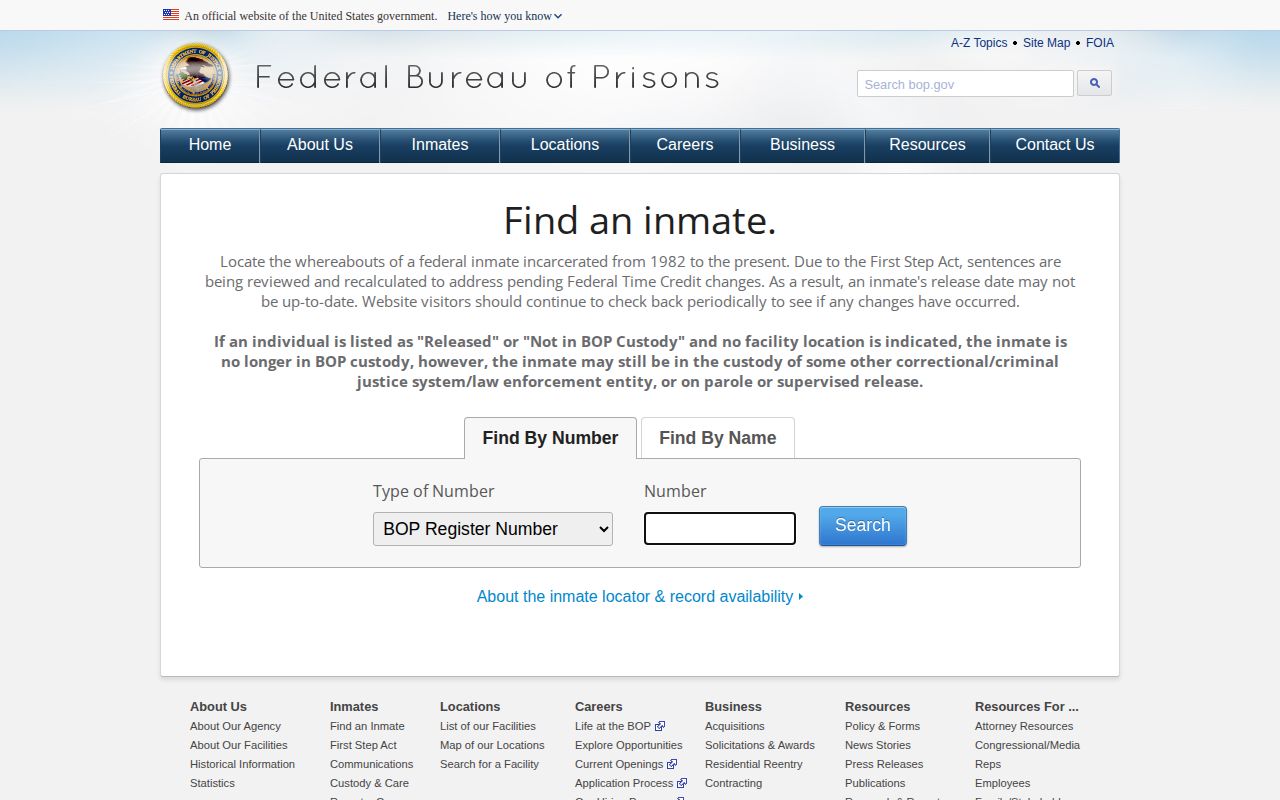
A Texas TDCJ number cannot resolve the federal record, just as a BOP register number does not prove a TDCJ state-prison date.
ICE is another distinct system. Its detainee locator covers current detention and people released from ICE custody within the preceding 60 days. A county OUT DATE followed by ICE custody is a transfer, not a community release. After the locator window, use the authorized ICE case or records route.
Texas Court Orders and Release
A signed judgment or order can explain the legal basis for a release calculation, but it does not record the exact time a jail or prison completed physical release. Texas does not have one public trial-court person-search portal. District and county matters route to the correct clerk. Justice and municipal matters route to those courts. The statewide re:SearchTX service reflects electronic court records and its own access rules.
The re:SearchTX landing page in this image is a court-document route, not a TDCJ projected-date calculator or a statewide jail-release database.
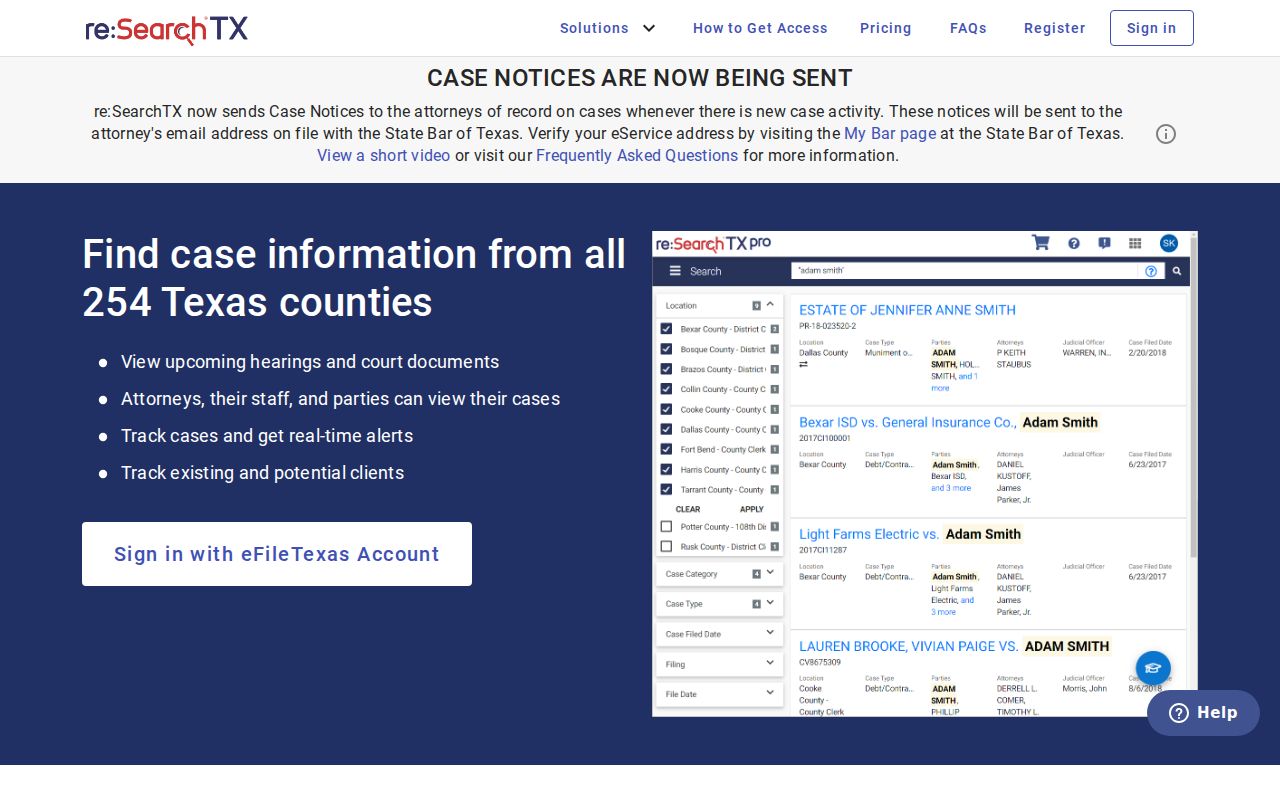
The court record can show the sentence or order that affects release, while TDCJ or the sheriff supplies the custody calculation and departure record.
When the sentence data appears wrong, compare the signed judgment with the current agency detail. Ask the clerk for the case record and ask TDCJ for an existing calculation or incarceration record. Do not ask either office to guess what the other system did.
Confirm a Texas Actual Release
Near a planned TDCJ date, check the live detail again and contact the unit before a pickup. TDCJ says releases generally occur from 8:00 a.m. to 5:00 p.m., Monday through Friday except holidays, yet scheduling can still change. Some classifications and conditions shift release processing to the Huntsville Unit. A detainer can also change the destination.
For status notices, the current statewide system is Texas Integrated Victim Services System, or IVSS. It covers people in TDCJ custody or on parole or mandatory supervision and can issue status-change notices. Register before the anticipated event when possible. A notification should still be reconciled with TDCJ and any receiving agency. The Texas VINELink Release Check explains the current IVSS routes and the older search wording.
After the person leaves, use TDCJ email or telephone service to ask for the actual date and whether the exit was parole, mandatory supervision, discharge, or transfer. Request the release certificate when the authority to leave prison matters. Ask for separate discharge proof when the issue is whether supervision later ended. If the destination was another agency, continue there.