
Texas Parole Board Review
The Texas Board of Pardons and Paroles, known as BPP, makes discretionary parole and clemency decisions. It is institutionally distinct from the TDCJ Parole Division. The Board reviews and votes on release matters. The Parole Division handles release processing and supervises people after parole or mandatory-supervision release. This line prevents a common error: asking a supervision office for a Board vote, or treating a favorable vote as proof that release has already occurred.
Government Code section 508.141 authorizes parole panels to make release decisions. The official case file and parole guidelines inform review. Eligibility comes first. Review, a panel vote, release-certificate processing, a records audit, an approved plan or address, and physical exit can follow. These stages are sequential, and a delay at one stage does not erase the earlier one. Record the stage and date shown by the source.
- Eligibility
- The point at which law permits parole review, not a promise of release.
- Parole review
- The Board's examination of the official file and applicable guidelines.
- Favorable action
- A Board vote supporting release, sometimes subject to a date or program.
- Physical release
- The documented exit from custody after required processing is complete.
The TDCJ agency page establishes the corrections system within which Board review and release processing occur.
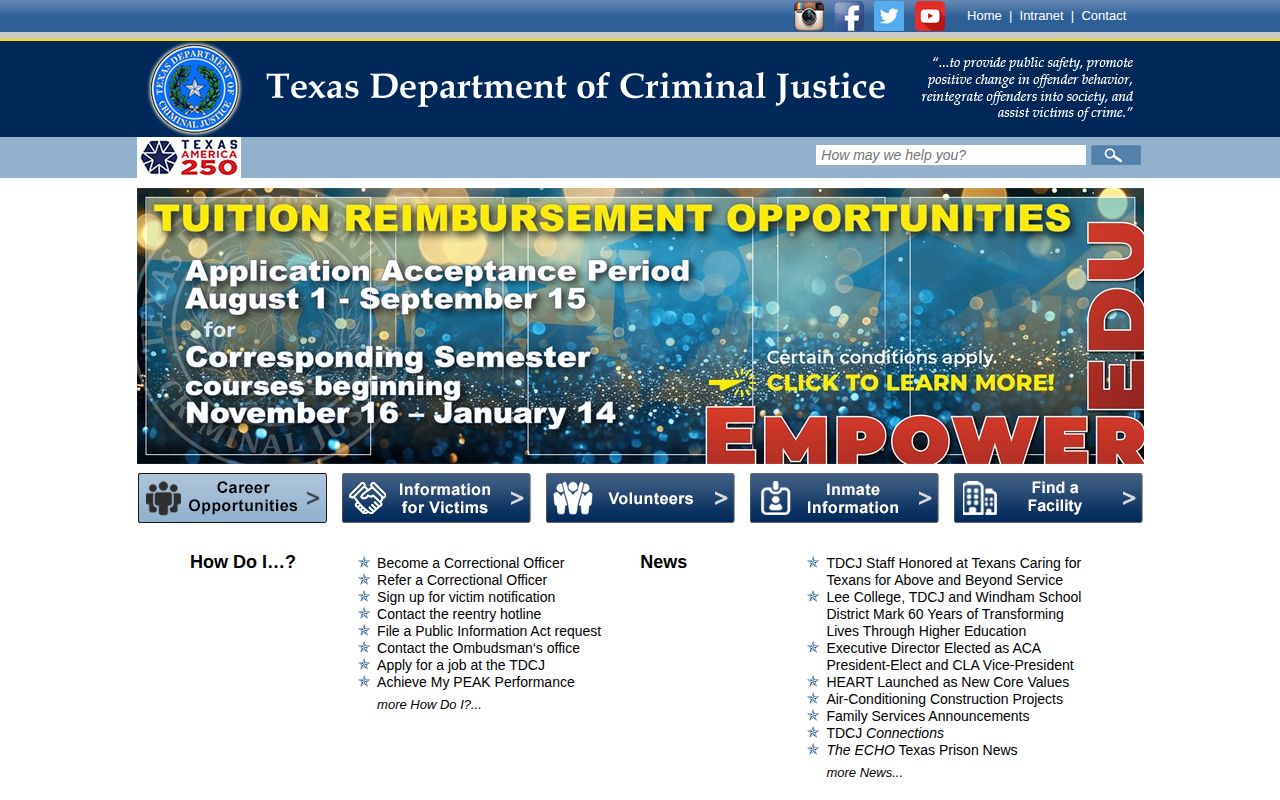
The Board remains a separate decision-making body even though its official pages share the TDCJ web domain.
Texas Parole Revocation Hearings
A revocation hearing concerns alleged conduct after supervised release. It is not the routine process used to decide whether an incarcerated person should first receive parole. Hearing Operations can schedule revocation proceedings at county jails or TDCJ units. That operational schedule belongs to the specific case and proceeding, not to the Board's public agency-meeting page. A person held on an alleged parole violation may therefore have a real hearing while an inmate under ordinary parole review has only a file-vote process.
Confirm the proceeding from the notice or case record. The alleged violation, warrant status, hearing stage, and final revocation result are separate facts. A current county-jail record can show physical custody on a parole matter, while the Parole Division or hearing record addresses why the hold exists. The Board's meeting minutes will not resolve those person-specific questions.
Release from a revocation hold can also have several meanings. It may reflect reinstatement to supervision, transfer, another warrant, completion of a custody action, or a later discharge. Use the final case document and the holding agency's release record together before describing the result.
No Texas Inmate Hearing Calendar
BPP states that it does not hold formal hearings for ordinary parole or mandatory-release consideration. Panel members vote case files individually. There is therefore no current public calendar to search by inmate name, TDCJ number, facility, or hearing month. Calling a file review a scheduled public hearing creates a false expectation about attendance and public access. For a named person, use the status process instead.
Revocation hearings are different. Hearing Operations schedules them as part of an alleged violation process, often at a county jail or TDCJ unit. Agency-business meetings are different again. The Board must meet at least once each calendar quarter, but those meetings concern Board business rather than individual parole-result listings. A date found in one category should not be carried into another.
The official parole panel review FAQ directly explains the lack of a formal hearing in ordinary cases.
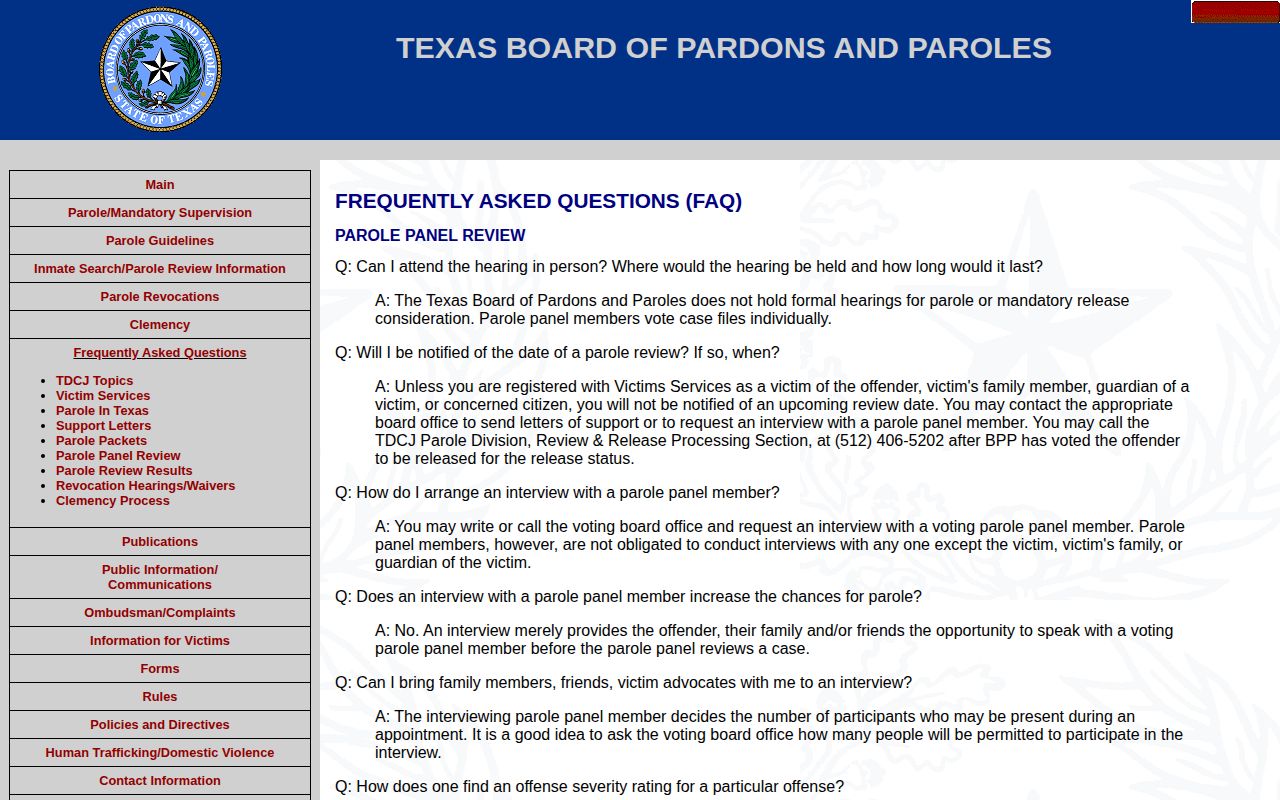
This is the controlling source when a search phrase suggests a hearing date that Texas does not publish.
Note: Ask whether the event is a file review, revocation hearing, clemency matter, or agency meeting before searching for a date.
Texas Board Meeting Records
The BPP website still exposes a Meeting Schedule page, but its entries are stale and concern fiscal years 2013 and 2014. It is agency-business history, not a live schedule. It does not show when a panel will vote on a named person's file. The Board meeting and workshop minutes archive is the better source for published agency-business records, although the archive does not promise a fixed posting delay and does not provide individual inmate decisions.
Read each page according to its label. A Board meeting can address policy, administration, or workshops. An individual parole review takes place through panel members' file votes. A revocation hearing addresses alleged violations. None of those categories alone confirms that someone left TDCJ custody.
The historical BPP meeting schedule displays the legacy calendar that can mislead an unwary searcher.
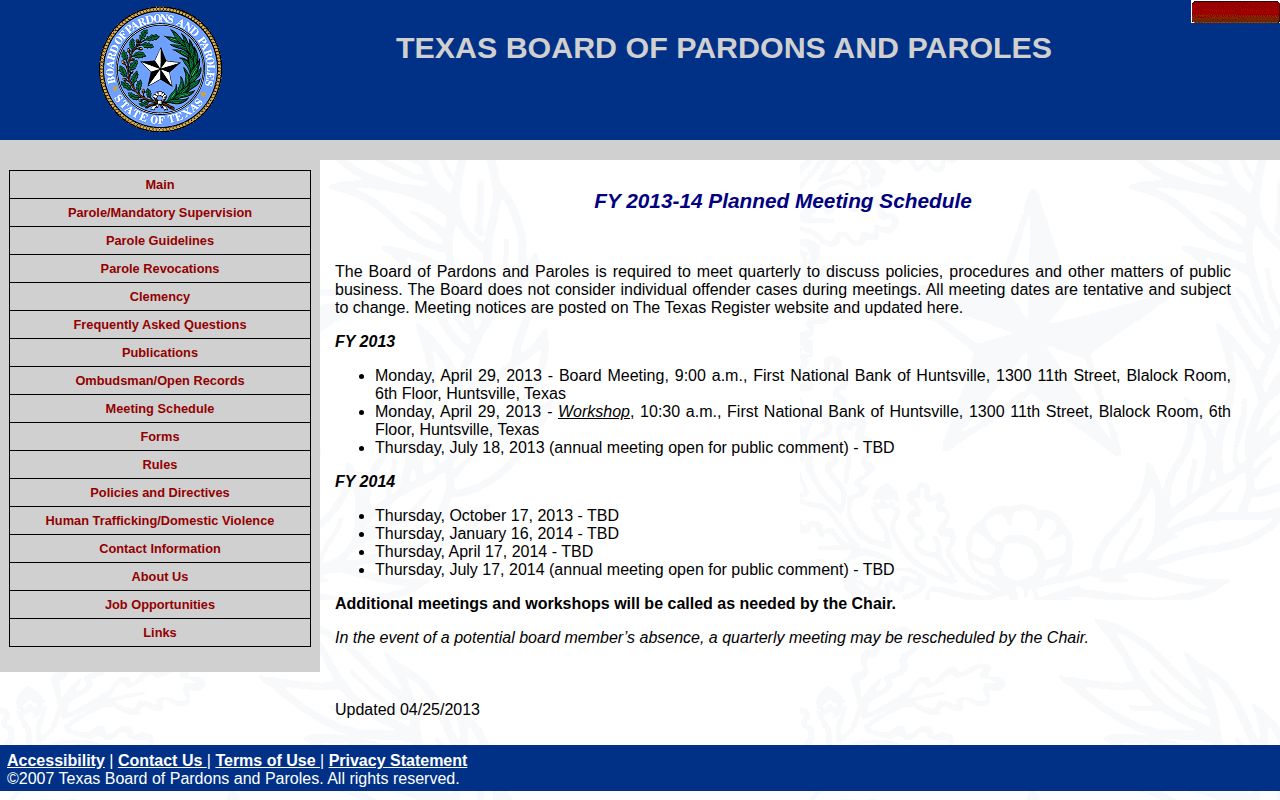
Its old fiscal-year entries are evidence of prior agency meetings, not upcoming Texas parole board hearings.
The official meeting and workshop minutes archive is the current route for published Board-business minutes.
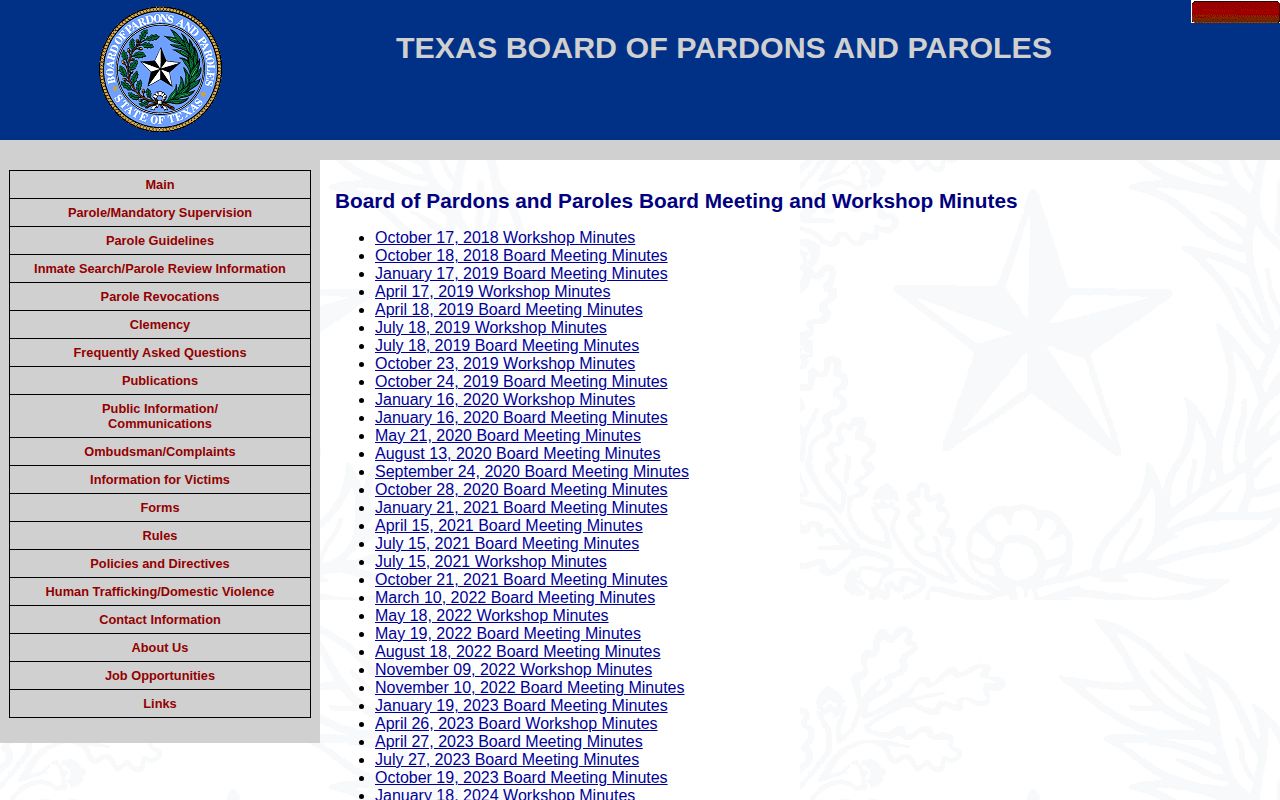
Those minutes should be used for agency actions, not as a substitute for the status of an individual parole file.
Find a Texas Parole Decision
A named-person inquiry starts at the Board's parole status page and status line. Use enough identifying detail to distinguish people with similar names. The BPP material describes the web response as almost real-time. The separate TDCJ custodial detail is updated on working days and can be at least 24 hours old, so two official views may reflect adjacent stages rather than an actual conflict.
- Open the BPP Parole Status page and gather the identifiers it requests.
- Check the named person's decision status or call 844-512-0461 between 8 a.m. and 5 p.m. Central, Monday through Friday.
- Read the exact vote code and any future date, program, or special condition attached to it.
- Use the TDCJ detail only for a person who remains in TDCJ custody, then distinguish projected or scheduled information from actual release.
- For proof of a past event after the person vanishes from the live search, request TDCJ or Board records tied to the person and date.
The live TDCJ search includes only people currently incarcerated in a TDCJ facility. A person released on parole, mandatory supervision, or discharge will not remain there under a public Released or Discharged label. Use IVSS for continuing parole or mandatory-supervision status, the Parole Division for the assigned supervision office, and a records request for historical proof.
Note: A favorable vote and a scheduled release field are strong stage markers, but neither alone proves the gate process is complete.
Texas Parole Vote Outcomes
BPP reports use defined vote codes rather than a simple courtroom-style list of granted, denied, and continued hearings. An FI code is a favorable parole action and can be tied to a future date or an institutional program. An NR code is a denial that includes later review. Other codes and special conditions have their own effects. Always read the full code description in the current Board publication or status response.
| Result or stage | What it means | What to verify next |
|---|---|---|
| FI favorable action | The panel favors parole, sometimes after a program or on a future date. | Conditions, release processing, and actual exit |
| NR denial | Release is denied with a later review point. | The stated review timing and any later vote |
| Special condition | A defined requirement is attached to the favorable action. | Completion and updated release scheduling |
| Scheduled release | TDCJ processing has produced a scheduled date or place. | Day-of-release confirmation |
| Discharge | The sentence or supervision has formally ended. | The actual discharge document |
A grant does not guarantee immediate movement into the community. The records audit, release plan, certificate, detainers, and receiving-custody questions can matter. Report a vote as a vote. Report physical release only when the responsible agency confirms that event.
Texas Parole Eligibility Rules
Government Code section 508.145 supplies major parole eligibility rules, while section 508.149 identifies people and offenses that are ineligible for mandatory supervision. Texas does not have one accurate percentage for every sentence. Offense, offense date, sentence, and case circumstances control. For the serious-offense category in section 508.145(d), eligibility generally requires actual calendar time equal to the lesser of one-half the sentence or 30 years, without good-conduct time counting toward that minimum. Other subsections differ.
Eligibility only opens the decision process. It does not forecast a favorable vote. The panel still reviews the official file and guidelines. A person can be eligible for consideration while remaining incarcerated, and a person with a favorable decision can still await later release steps. The detailed Texas Inmate Release Date page separates projected, scheduled, and actual dates.
Question: Is the first eligibility date a hearing date? No. It is a legal threshold for review. Ordinary Texas consideration uses individual file votes and has no formal public hearing calendar.
Texas Clemency and Pardon Records
Clemency is not parole. The BPP publishes separate clemency instructions and forms. In matters within its authority, the Board investigates, votes, and makes recommendations, while the governor's action is governed by the Texas constitutional and statutory framework. The correct source is the clemency file and final action, not the ordinary parole-status route alone.
A pardon may affect legal consequences and later record paths, but a missing online result does not prove one was granted. Verify the Board recommendation and gubernatorial action through the official BPP clemency information. Then distinguish that action from expunction, nondisclosure, parole discharge, and a custody release record. Each answers a different question.
The Texas file-review structure also means clemency should not be forced into the obsolete agency-meeting calendar. Use the clemency instructions for the application and recommendation path, and the person-specific record for the outcome. Post-release supervision, where it exists, is covered separately under Parole / Probation.
Preserve Texas Parole Decision Records
A strong record trail keeps the status response, vote code, source, and check date together. If the person remains incarcerated, save the TDCJ number and the exact projected or scheduled fields displayed. If release later occurs, obtain the event or historical record from the office that recorded it. The live TDCJ inmate search does not retain released, paroled, mandatorily supervised, or discharged people as public Released or Discharged entries.
For a formal request, identify the existing document. Texas Government Code Chapter 552 governs many agency records, subject to exceptions and confidentiality law. TDCJ's Office of the General Counsel accepts public-information requests through its official channels. A useful request can seek the releasable vote, release or discharge date and type, release certificate, or related history for a named person and date range. The agency need not create a new analysis to answer a question.
A court order may explain a detainer, sentence change, or other legal event, but it does not prove when a TDCJ unit completed physical release. Conversely, a custody exit does not explain the Board's legal basis. Pair documents only when each supports the part of the timeline assigned to it.
When dates differ, keep the source labels visible. Review date, vote date, scheduled date, and out date describe separate acts. The sequence is often more informative than any one date viewed alone.