
Texas Parole and Probation Compared
Parole is a conditional release from a TDCJ sentence before the sentence has fully ended. Mandatory supervision is another form of supervised state release. The Texas Board of Pardons and Paroles, or BPP, decides discretionary parole and discretionary mandatory-supervision matters. The Texas Department of Criminal Justice Parole Division then supervises people released on parole or mandatory supervision. These roles are related but not interchangeable. A favorable Board vote is a decision stage. It does not mean the person has already walked out of a unit or reported to a field office.
Probation is generally called community supervision in Texas. A judge places a person under it, and a local Community Supervision and Corrections Department, or CSCD, administers the case under the sentencing court. Texas has no single public statewide probation-person locator. The court docket, signed order, and relevant CSCD are therefore the sound route for verifying that status. The distinction controls which record can prove that supervision began, remains active, or ended.
| Point | Parole or mandatory supervision | Probation or community supervision |
|---|---|---|
| Authority | BPP release decision and TDCJ administration | Sentencing court order |
| Supervisor | TDCJ Parole Division | Local CSCD under the court |
| Best public route | IVSS, BPP status route, and Parole Division office | County or district court docket and the relevant CSCD |
| Strong end record | TDCJ discharge documentation | Signed court order and CSCD record |
- Parole
- Conditional release from a state prison sentence after a favorable parole decision.
- Mandatory supervision
- Statutory supervised release governed by eligibility rules and, for many cases, Board review.
- Community supervision
- The Texas term commonly used for probation imposed by a court.
- Discharge
- The formal end of the sentence or supervision obligation shown by the responsible agency or court.
The official TDCJ home page identifies the state corrections agency behind the Parole Division.
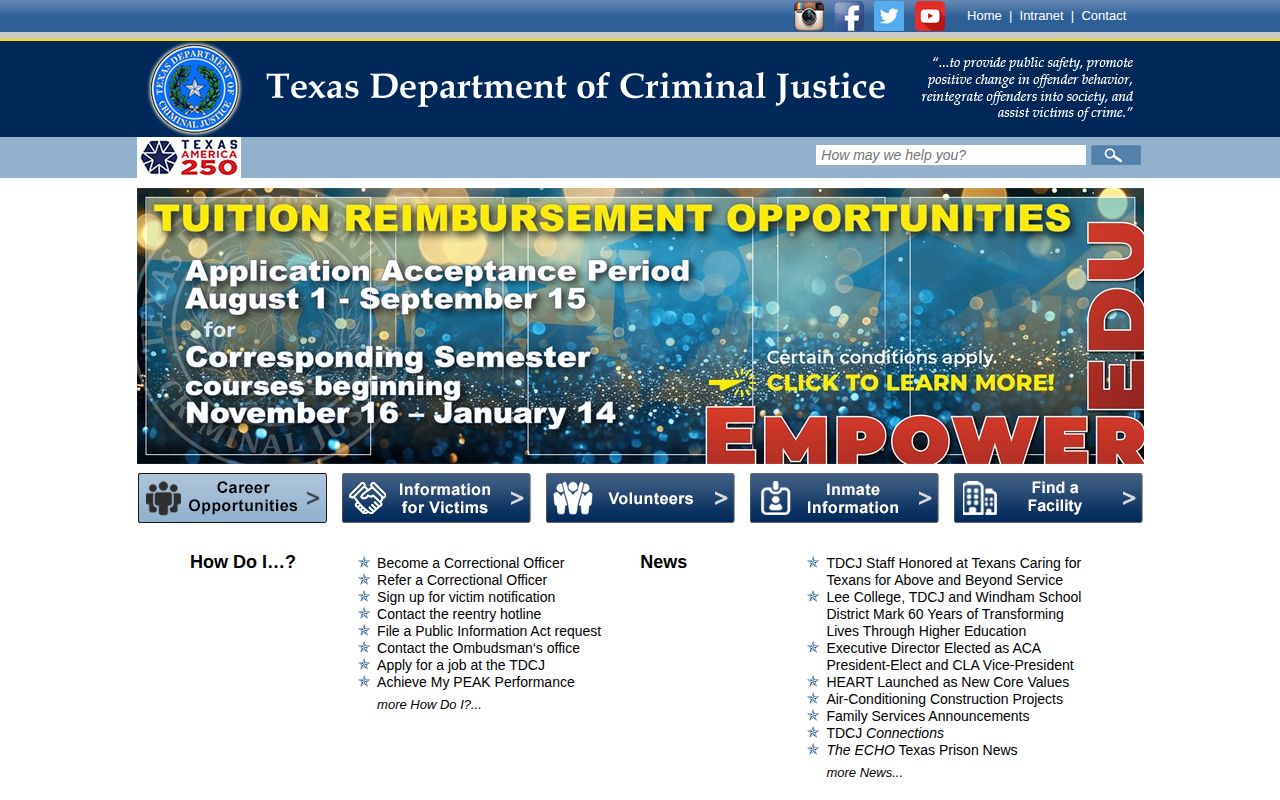
That agency identity matters because TDCJ does not operate county probation departments.
Verify Texas Post-Release Supervision
Start with the custody and case history, not a broad name search. A person released from TDCJ may be on parole, mandatory supervision, or fully discharged. Someone sentenced in a county or district court may instead be on community supervision. A released county-jail detainee may have neither. The online TDCJ inmate search covers people currently incarcerated in a TDCJ facility, so disappearance from that live search does not, by itself, prove release or discharge.
- Identify whether the sentence was a TDCJ prison case or a court-ordered community-supervision case. Use the cause number and sentencing county when available.
- For parole or mandatory supervision, check Texas IVSS for the named person and compare identifiers before relying on the match.
- Use the Parole Division office directory to find the district office tied to the release plan and ask which office owns the case.
- For probation, obtain the sentencing court docket and contact that county's CSCD. The statewide county directory provides the local route.
- When an end date matters, request the actual discharge record, signed termination order, or CSCD record. Do not estimate it from sentence length alone.
The re:SearchTX landing page shows one statewide court-document route, though criminal trial-court coverage is not universal.
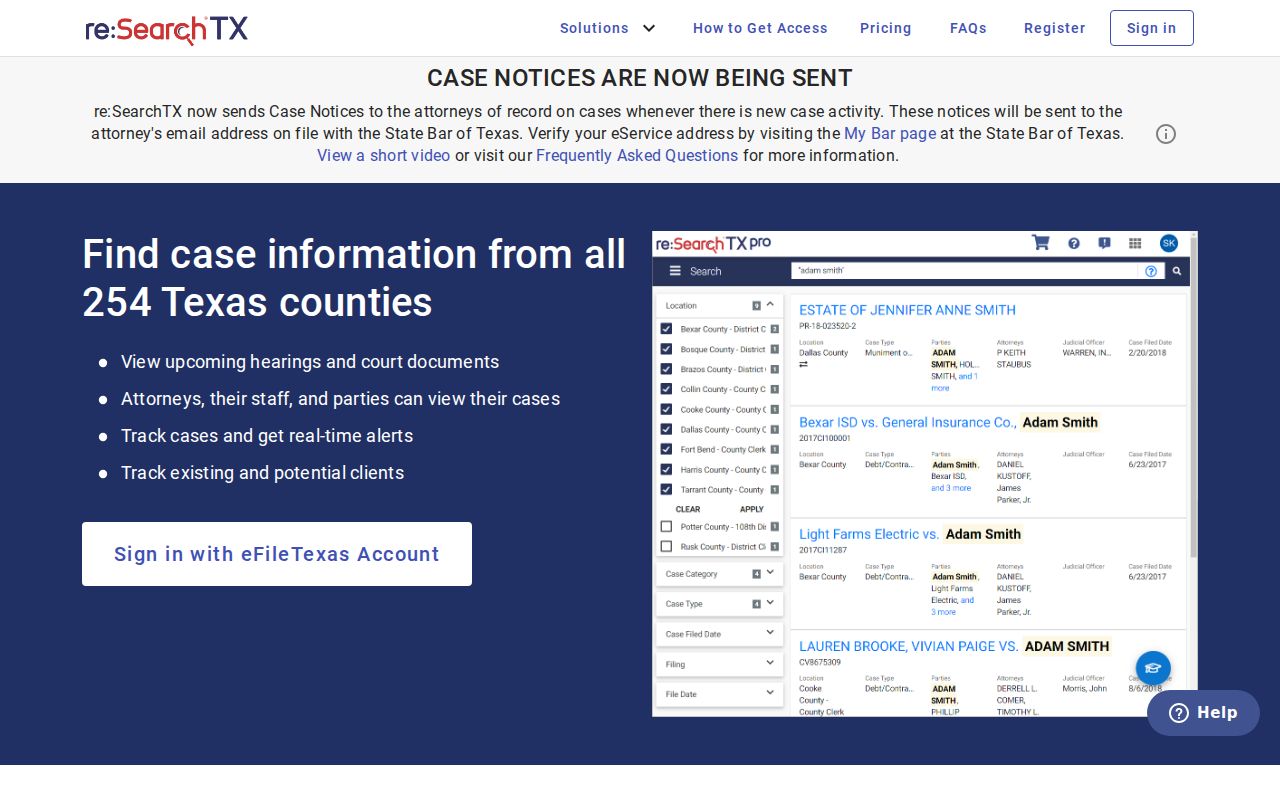
A local clerk remains the record custodian when the statewide portal does not expose the probation case.
Note: Match the court, cause number, and person before treating a supervision record as proof of current Texas status.
Texas Community Supervision Records
A probation check begins with the sentencing court because community supervision is a court status. Texas does not offer a single public search that combines every CSCD case. The Judicial Branch instead directs district and county case inquiries to the proper clerk, while justice and municipal matters go to those courts. re:SearchTX can provide an electronic-document view in some matters, but statewide reporting has noted that its large document collection excludes criminal case records. That limit makes the local clerk more than a fallback. In many probation cases, the clerk is the primary public route.
Ask for the cause-specific docket and signed orders. The first community-supervision order states the court action. A later modification, revocation, reduction, or termination order changes that history. CSCD information can then confirm which local department administered the supervision and whether its record reflects closure. When the court and CSCD descriptions seem different, compare dates and obtain the signed order instead of choosing the most favorable wording.
| Texas probation question | Best record owner |
|---|---|
| Was community supervision imposed? | Sentencing court and clerk |
| Which department handled the case? | Local CSCD |
| Was a condition changed? | Signed modification order |
| Was supervision reduced or terminated? | Signed court order plus CSCD record |
A live county jail roster answers whether the person is currently shown in that jail. It does not state whether probation remains open after release. The court case and CSCD file answer that separate post-release question.
Texas Parole Supervision Offices
The BPP decides whether discretionary parole should be granted. The Parole Division supervises the person after release. Its regional and district office directory is the most reliable statewide routing source because responsibility follows an approved release plan and assigned office, not merely the county where a person was convicted. Ask the listed district office to confirm whether it owns the case and where an official request should go. The BPP status line addresses the decision side, while the field office addresses active supervision.
State parole routes
Texas Board of Pardons and Paroles
Parole status information
844-512-0461
Monday through Friday, 8 a.m. to 5 p.m. Central
TDCJ Parole Division
Division overview
Regional and district offices
The Board's web response is described as almost real-time, but TDCJ custodial details can be at least one working day old. A parole approval also precedes records review, release-plan approval, certificate processing, and physical exit. Keep those stages distinct. For a complete explanation of the file-vote process, use the Parole Board Hearings page.
The BPP panel-review explanation shows why a routine parole matter is not a public courtroom-style event.
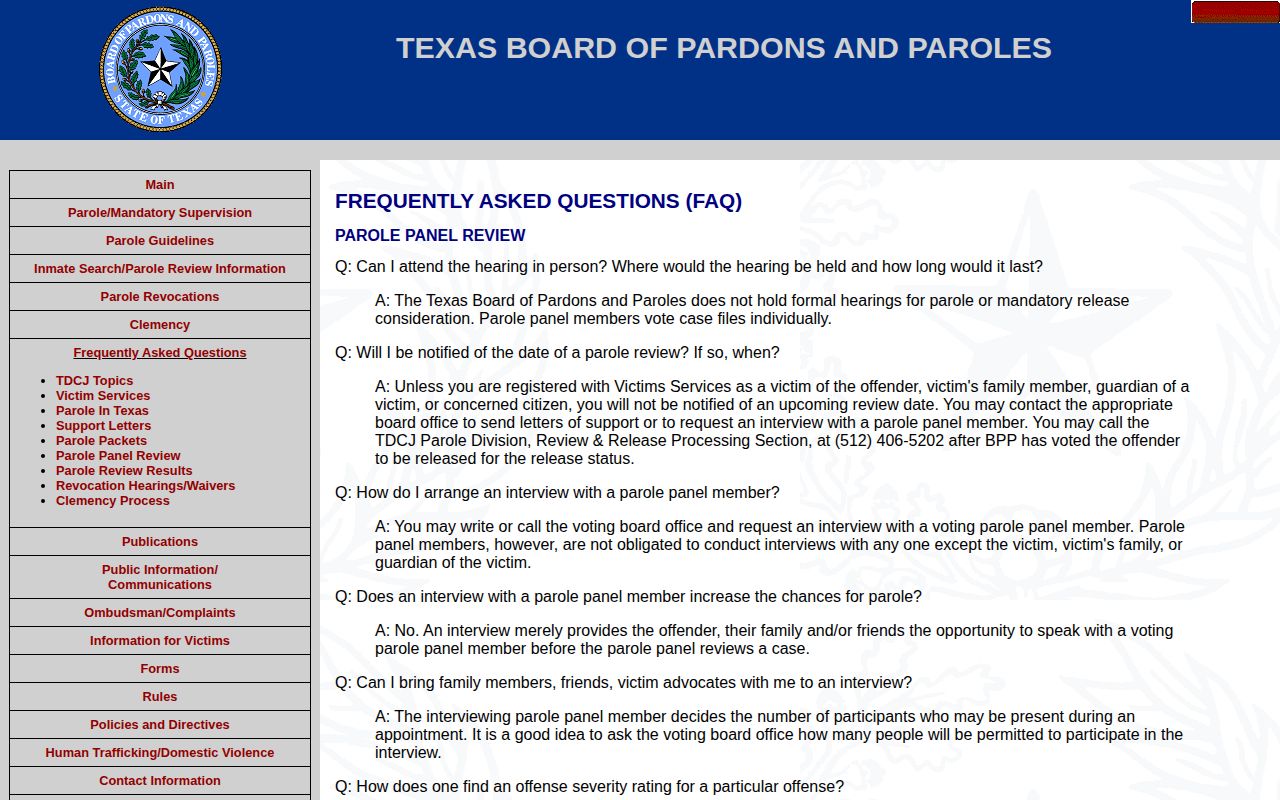
Use the vote and status route for the decision, then the field office for supervision.
Texas Parole Violations and Warrants
Supervision conditions come from the applicable release certificate, court order, and agency rules. A reported violation can lead to review, a warrant, or revocation proceedings, but the public sources do not offer a universal list of all people accused of violating parole or probation. TDCJ's Sex Offender Absconder Information Search and the Texas Department of Public Safety Sex Offender Registry serve narrow statutory purposes. A name missing from either system does not prove compliance, discharge, or the absence of a warrant.
For a claimed parole warrant, contact the assigned Parole Division office. For a probation warrant, check the issuing court and county authority. Revocation is also distinct from an ordinary parole-release vote. Revocation hearings can be scheduled operationally at county jails or TDCJ units, while standard parole consideration is decided through individual file votes without a formal public hearing. The type of proceeding determines where the record sits.
The Board meeting and workshop archive records agency business rather than individual supervision violations.
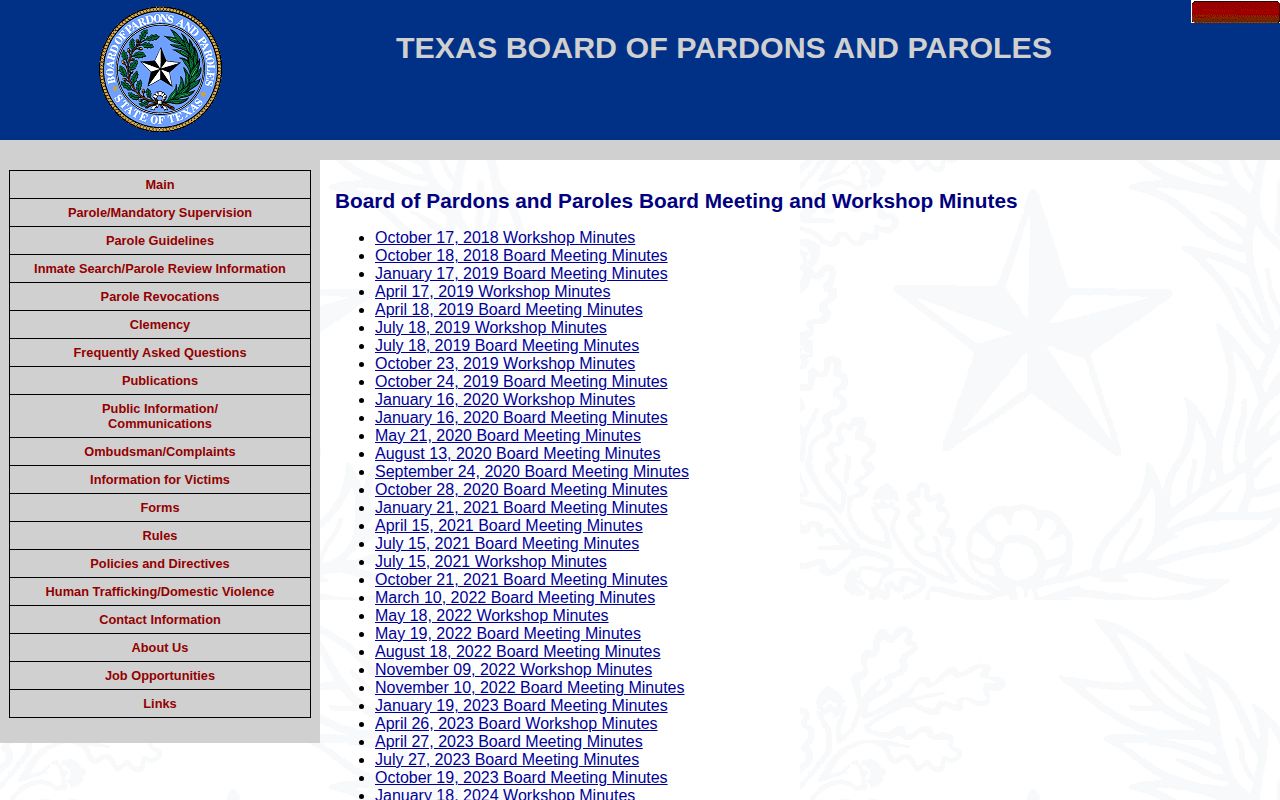
Those minutes should not be searched as a substitute for a person-specific parole or warrant record.
Texas Supervision Discharge Records
Supervision ends through a formal act, not a guess based on elapsed time. For parole or mandatory supervision, seek TDCJ documentation tied to the person and sentence. For community supervision, look for the court order and the CSCD record. Texas Code of Criminal Procedure article 42A.701 permits a judge to reduce or terminate qualifying community supervision in specified circumstances. Only the signed order proves that the court used that authority in a particular case.
Tolling, revocation, a new judgment, and sentence calculations can all affect an endpoint. A former projected release date is not the same as a discharge date. Nor does a release certificate necessarily prove that supervision later ended. The statewide release record paths on the Texas released inmates home page help separate physical exit, supervised-release authority, and final discharge.
Question: Does a vanished TDCJ search result prove parole ended? No. The live TDCJ search includes only people currently incarcerated in a TDCJ facility. Confirm post-release supervision in IVSS or through the Parole Division, then request discharge documentation if the sentence endpoint is the issue.
Texas Reentry and Supervision Navigation
The TDCJ Reentry and Integration Division is a named statewide source for pre-release and post-release program navigation. It belongs beside the Parole Division office directory when a person needs the correct state program or office after release. It does not replace the BPP decision record, the Parole Division's verification of an active case, or a local court record for community supervision.
This statewide structure is useful because Texas parole and probation records do not converge in one locator. Parole routing follows TDCJ regions and district offices. Probation routing follows the sentencing court and its local CSCD. Reentry program navigation is a third function. Keeping the three tracks separate produces a clear answer about who made the decision, who supervises the case, and which record proves its current stage.
The legacy BPP meeting schedule illustrates an agency-business calendar, not a parolee supervision list.
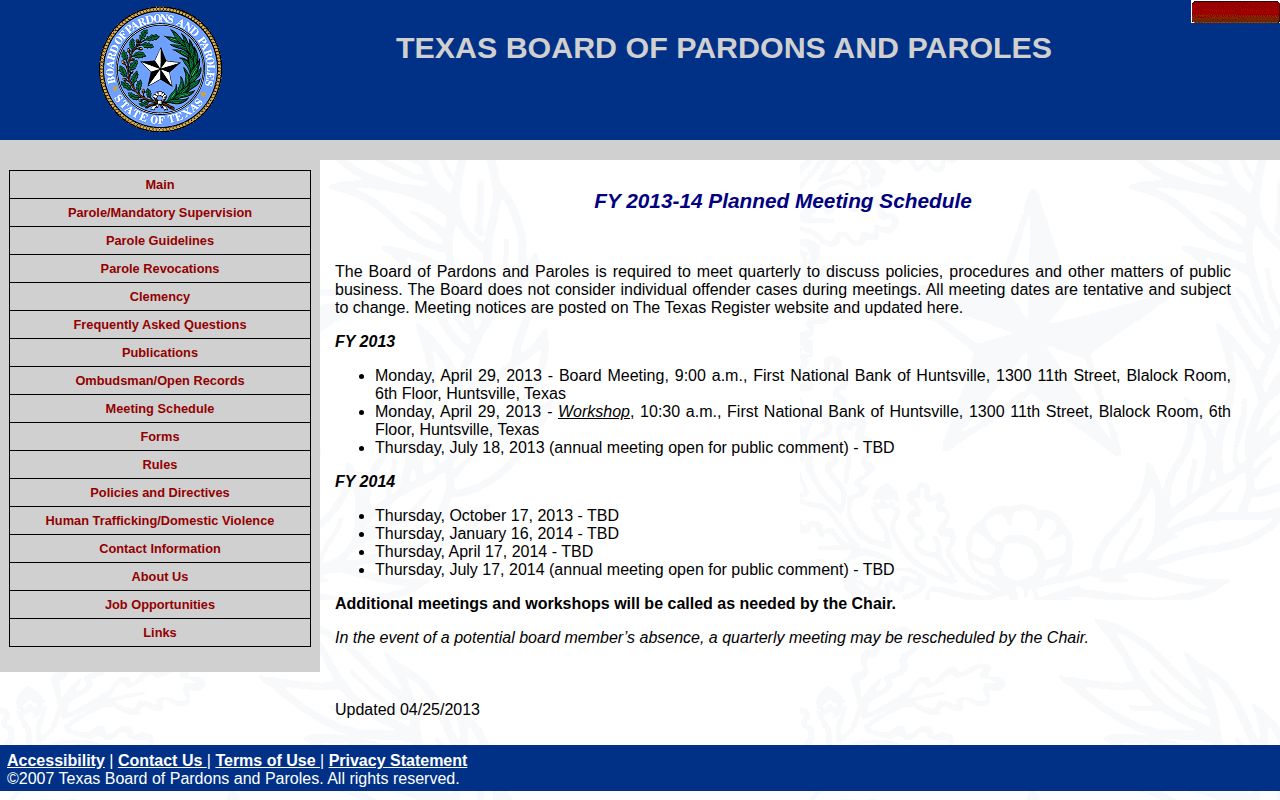
Its dated entries should never be used to infer a named person's parole status.
Note: Texas reentry navigation and supervision verification are related services, but each has a separate official purpose and record owner.
Request Texas Supervision Proof
Texas Government Code Chapter 552, the Public Information Act, applies to existing information held by governmental bodies, subject to exceptions and other confidentiality laws. A request should go to the body that has the record. It should ask for an identifiable document rather than ask the office to answer a broad legal question. For a parole matter, identify the person, TDCJ or SID number when known, sentence, and useful date range. Request the releasable supervision or discharge record that answers the issue.
Court case records use a different access framework. Texas courts are not governed by the Public Information Act for their case records. The clerk ordinarily serves as custodian under court rules, statutes, and common law. That is why a probation termination order goes to the court clerk, while a TDCJ parole discharge document routes to TDCJ. Keep a copy of the request and the office's response so the source and date remain clear.
The often-cited ten-business-day period is not a promise that every public record will arrive by that date. Texas law uses a prompt-production standard and has separate timing rules for an agency that seeks an Attorney General decision to withhold information. Redaction, an estimate, privacy law, and the need to identify the right file can affect delivery.
For each response, note whether the office confirmed active supervision, supplied an end record, or referred the request elsewhere. Those outcomes should not be collapsed into one claim. A referral can simply mean another office owns the file.